So this is just a quick blog post in which I'm REALLY excited for my summer plans, which just came together over the weekend, in chronologically reversed order. So I wanted to gush about that for a little bit!
Benson is going to two conferences this summer, in July: one in Warsaw, Poland, and the other near Barcelona, Spain. I had originally been planning on flying out to California for his graduation in mid-June, but when he invited me to go around Europe with him for a couple weeks, I decided that Europa took priority over Cali. This weekend, we spent a large chunk of Saturday discussing our plans and booking flights. Since travel within Europe itself is relatively inexpensive, and we knew we wanted to take 2 weeks to travel, the whole continent was pretty much our oyster. Which turned out to be a little problematic, since we both love to travel and want to go EVERYWHERE, eventually.
Our planning went in reverse: We knew we wanted to end in Warsaw, of course, since that is where the first conference is and therefore where I must end my trip. I'm going to actually be there for the first few days of the conference, probably looking around Warsaw on my own while Benson does conference-y things. I've never been to Poland before, and Warsaw should be really interesting. Just prior to the conference, we'll be in Italy: a friend of Benson has family near Rome, and invited us to stay for the week before the conference. I've been to Rome before - when I was in undergrad, my family took a summer and spent 5 weeks in Europe, two of which were traveling around Italy and the other three in France. Rome was one of the stops we went to, so I don't feel the need to do ALL THE THINGS in Rome or nearby... it will be nice to explore smaller towns and take a more relaxed trip, and with people who know the area - not to mentioned home cooked Italian meals!
Prague was the last place we settled on - as I said, since travel is cheap within Europa, we could have gone pretty much anywhere before heading to Italy and then Poland. [An amusing side note: when Benson was describing this trip to his parents, they were apparently under the misapprehension that the conference was in PORTLAND instead of POLAND. A slight difference there...] Anyway, Prague was actually one of the places we had been thinking about before we got the Italy invitation, since it was within reasonable distance to Warsaw by train. So after about an hour discussion of all the awesome places to go in Europe, we kind of defaulted back to Prague on the basis that while there were many we want to go, most of them we'd want to spend more time than available (Istanbul, Greece, and Norway were dismissed for these reasons, for example, since although those are all trips we've been wanting to do for a while, none of them could be done justice in only 5-6 days). My parents have been to Prague, and they highly recommended it: they thought it was fantastic, like a fairy tale city with great music and culture.
So once Europe was worked out, we just had to figure out if we were doing anything prior. In order to see friends, not to mention so that we can take the same trans-continental flight, Benson is going to be in NYC for a few days prior to this vacation. Now, Benson very recently defended his dissertation and received his PhD in Physics at UC Santa Barbara. He'll be going to Cambridge, England, for a three year post doc starting next October. This, of course, is cause for great celebration.
Now, I did get Benson a present for graduating when I was out there over spring break: whiskey! Benson is a big fan of whiskey in general - he has been since undergrad. In fact, he was given a list of quality scotches by one of the professors at Brandeis, which he's been studiously(?) working through, trying all varieties. This is known as "Craig's List", after said professor. Education is a wonderful thing. [Indeed, once during a lab class with said professor, Benson was talking to him about scotch, and I had to interrupt, said I, "with a non-whiskey related question." "You have to get your priorities straight" responded my professor.] We both like whiskey a lot, is the point, though Benson is more into it than I am - I appreciate it, but don't think I'm a connoisseur or anything. Before my 25th birthday we made a point to go out and drink scotch older than we were (25 year old Bowmore) at Angel's Share in NYC (a most excellent speak-easy, with great cocktails and liquor selection). Since then, we've actually managed to replicate this feat with two additional whiskeys, despite our own aging: my dad has a friend who collects whiskeys, and I've received a couple of very small (as in several ounces) bottles of whiskey since, as presents; so we've also tried 27 year old and 29 year old scotches as well, now. Since I wanted a nice, interesting gift for Benson's PhD, something he'd not gotten before, my dad's friend recommended several bottles of scotch that he thought would be good for such an occasion, from which I chose Aberlour A'Bunadh. Which is very nice indeed.
Now, after that somehow lengthy aside on whiskey (not a waste): Although I gave Benson a present for receiving the PhD, we wanted to go to a nice restaurant to celebrate his graduation, as well. I've mentioned before that we're both foodies to a certain extent, and I'm living in New York City. This means we have access to some of the finest restaurants world wide. This is not an exaggeration. Therefore this morning, exactly one month to the day prior to when we wanted our meal (and the first day possible for booking), at 10am sharp (when the booking line opens) I called Per Se. Per Se is a three-Michelin star restaurant. Last year it was number 6 on the worlds Best 100 Restaurants (which was top spot in the USA). You may recall that in February I was able go go to the restaurant on the number 61 spot, in Cape Town. This year Per Se was number 11 (second best in USA, the top being Eleven Madison Park, also in New York, which is the place I plan on going for MY graduation!). It is run by Thomas Keller, who happens to own TWO three-Michelin star restaurants, the other one being The French Laundry, in California. And as regular readers may recall, my most prized cookbooks is The French Laundry, which I have several different recipes chronologued in this blog. Yes, this is Thomas Keller's OTHER three-Michelin star restaurant. Repeat: I called right when the line opened, at 10am sharp, the earliest possible time. I then proceeded to wait on hold for 25 minutes, and, when I got through, there were only three time slots left. So Benson and I are now proudly possess a reservation at what will be the most expensive, exclusive, and hopefully amazing restaurant that we have ever eaten at to date. Benson is literally booking his flight around this restaurant reservation. To say this place is popular is an understatement. To say I'm excited is an understatement. And of course, finally, to say my summer is going to be awesome is hopefully also an understatement!
Showing posts with label French Laundry. Show all posts
Showing posts with label French Laundry. Show all posts
Monday, May 20, 2013

Monday, January 14, 2013
Death of a Lobster
Every time I visit Benson, or he visits me, we usually take one day for a large, ambitious cooking project. On this most recent visit, we discovered that Fresh Direct (a grocery delivery service I occasionally use in NYC) will actually deliver live lobsters to your doorstep, in addition to whatever else you can buy. And they were on sale. And I had a free delivery coupon. With these facts in mind, we decided to embark on our first ever lobster project, and ordered two lobsters, who, sure enough, arrived alive and well on delivery. They didn't arrive in a tank of water or anything - I was actually surprised that they arrived wrapped up in the usual paper and plastic wrappings that things like salmon filets also arrive in. (Their claws WERE rubber-banded, however). But I guess lobsters are pretty sturdy. We proceeded to name them "Butch" and "Sundance," and sentenced them to a terrible and delicious fate.
Butter Poached Lobster with Leeks, Pommes Maxime, and Beet Essence
2 or 3 lobsters
1 large yukon gold potato
1 lb beets (or 1 cup beet juice)
1 large bunch of leeks (which will turn into 1.5 cups of leek rounds)
2 tbs tomato diamonds
2 tsp chives
1 tbs Brunoise* (*to make, you need leeks, carrots, and a turnip)
3 cups of butter* (*which makes 1/2 cup clarified butter and 2 cups Beurre Monte)
1/2 tsp red wine vinegar
~1/2 cup white vinegar/8 quarts of water
a few drops of lemon juice
kosher salt
 Part 1: The Lobster. You can do this part early, and leave the lobster meat in the fridge until you are ready to cook it later (though bring it back to room temperature before you cook it). Unlike the traditional boiled lobster, here you don't fully cook the lobster in the shell - you leave it in the hot water only long enough to kill it and for the meat to pull away from the shell for easy removal. So, you need two large containers: one to initially boil the water and one which will hold the lobster and continue to cook it. Since my large pots are rather limited, I actually boiled the water in two separate smaller pots, than cooked the lobsters one at a time in my large pressure cooker pot (the largest pot I own). Fully cover the lobster with cold water in the pot it will be cooked in. Take that water, and put it in the another pot, and add 1/2 cup of white wine vinegar for every 8 quarts of water you used to cover the lobster. Bring this water to a boil. Pour this boiling water over your lobster. This kills the lobster. Now let it seep for 2 minutes (for a 1 1/4 lb lobster; 3 minutes for a 2 lb lobster). Remove the lobster from the hot water, but DON'T discard the water. Twist the claws off of the body and put them back in the hot water for 5 more minutes. During this time, detach the tail and carefully remove the tail meat by twisting off the tail fan thing and pushing the tail up and out (using kitchen shears helps). Cut the tail lengthwise, removing the sand vein. Once the claws are cooked, you remove those from the water as well, twisting off the knuckles. You can get the knuckle meat out as one big chunk of meat if you snip off the very top joint of each knuckle and cut away the shell. Do this. For the claws, you can rock the pincher back and forth, cracking it loose, then remove it straight off the claw, hopefully leaving the meat inside it still attached the the rest of the claw meat (I managed this on the second lobster, but not the first). You remove the rest of the meat from the shell by cracking the shell near the bottom on both sides, and pulling the shell bit off so the meat can come out the bottom. These steps results in a delicious plate of lobster meat, still for the most part uncooked. As for the body, you can pull off the back and remove the lungs, roe and the sack behind the head, and use the rest of the shells and body for soup, later. These can be frozen, or used promptly. You can use the water you boiled the lobster in for a base for your lobster broth, if you are making that as well. We did!
Part 2: Various vegetable preparation. Beets, potatoes, and leeks all play important parts in this dish, and if you are slicing and dicing one vegetable, you may as well do them all at once. For this, it's extremely useful to have a device called a mandoline (seen right), which can slice vegetables extremely thinly. This not only makes slicing vegetables quicker and easier, but it also results in amazingly thin potato slices, which you really want for this recipe. I've included two pictures below showing HOW THIN we were able to get our potato - laying it out you could literally read through it, and see the inner structures of the potato - it really made me want to break out a microscope! Awesomeness.

So, the next step is to very finely slice your potato, as thin as you can make it. And unless you either a) have beet juice, or b) have a juicer (we had neither), you also want to slice your 1 lb of beets as finely as you can, and then dice it nice and small, so they're easily blendable. While you are at it, take the leek rounds (the white and pale green part of the leek) and slice those as well, into strips (see picture in the leek section), until you have 1.5 cups of them. Finally, prepare the vegetables for your brunoise. What is a brunoise, you ask? Good question, I had no idea either. It's a finely diced mixture of various vegetables - in this case, equal parts carrots, leek greens (the dark green part), and turnips - where all of the components are diced to less than 3 mm - a very fine dice indeed (again, see picture in the leek section). You only need 1 tbs total of the brunoise, but since it freezes well, you can make a full turnips worth and save the rest for later. So I diced up the entire turnip, with equal parts by weight of leek greens and carrots (diced by Benson) to match, and just made a LARGE batch of it, rather than a 1 tbs batch. In addition, you want to neatly slice your tomato into at least 2 tbs of diamonds: peel it, quarter it, remove the core until you just have the outside, which you then slice longwise into strips, then diagonally to make diamond shapes, which are rather pretty! So, that's your chopping - but keep all components separate for now!
 Part 3: Pommes Maxime. You have your extremely fine slices of potatoes, so you are ready to make your fancy potato chip (which is kind of what this boils down to). Recall this recipe requires 3 cups of unsalted butter: You will now use about 3/4 cup of it to make 1/2 cup of clarified butter. This is pretty easy: just heat up the butter in a saucepan over low heat without stirring. It will separate. Skim off the top foamy layer of milk solids, leaving you with a clear, yellow butter beneath. That bit is the clarified butter, and it's what you use on the potatoes. Clarified butter can be heated up more without smoking since it doesn't have the milk solids in it. So, to make the pommes, take the potato sheets and dip them in butter, layering them on a silicon lined baking sheet either in one large sheet which you will cut up later, or into large round disks of potato. Sprinkle with salt, and bake in a preheated oven at 300F for 45-50 minutes, until they're brown and crisp. Keep an eye on them though, ours turned out a little toastier than we wanted - edible, but toasty. Mmmmm, toasty.
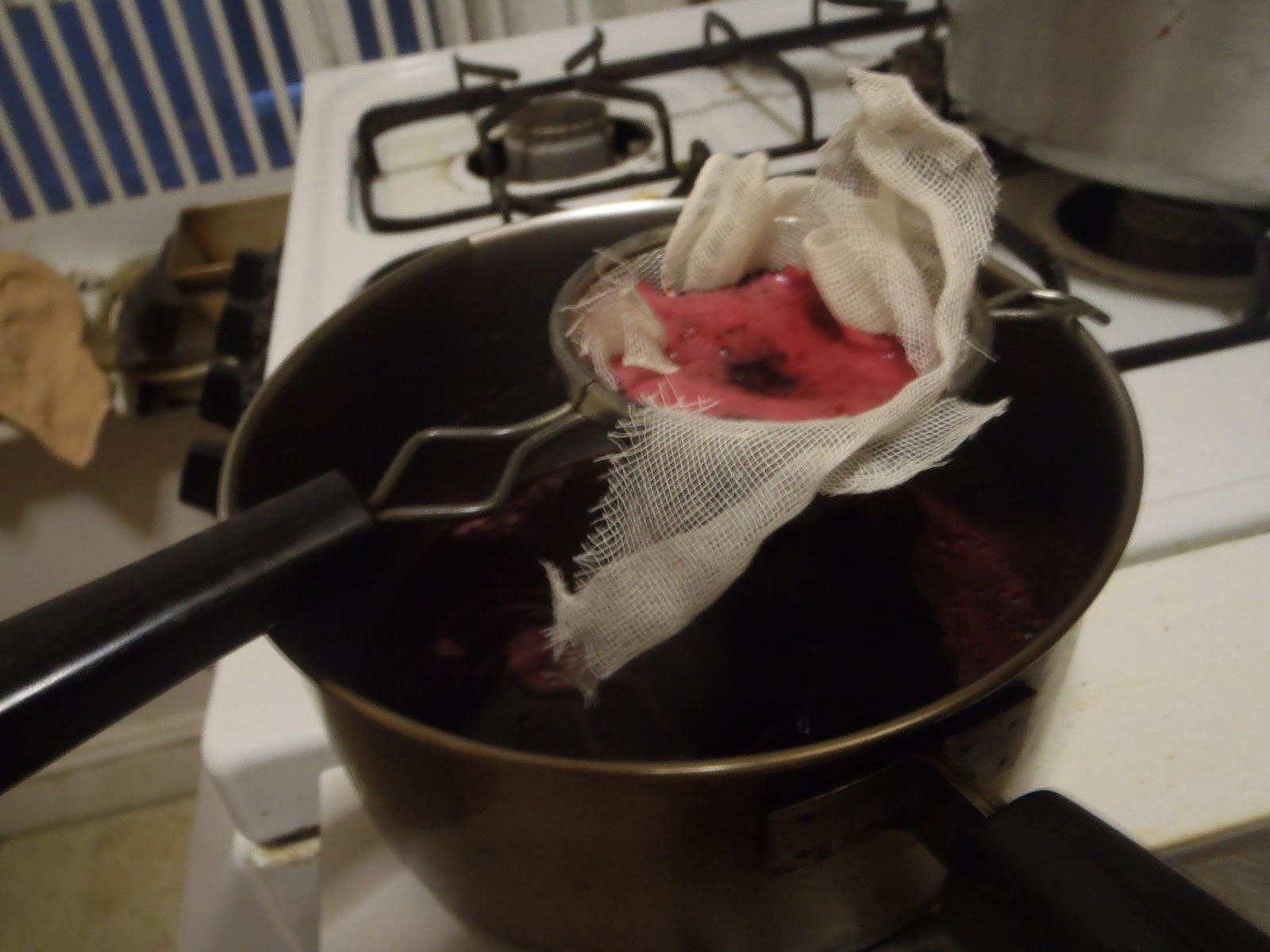
Part 4: Beet Essence. If you have a juicer or beet juice, you can skip this first bit. But if you DON'T, take your one lb of nicely sliced and diced beets and toss them into the blender. Add perhaps 3/4 cup of water and BLEND. Add more water if you can't get it to blend - what you are going for is a generous cup of the strongest beet water you can get. It's OK if it ends up a little extra watery - you'll be reducing this down to about 2-3 tbs, you just want all the beet essence you can get. So blend, blend, blend, then press it through a strainer and get all the liquid out you can. Then strain THAT through cheesecloth and a finer strainer (or a chinoise/tamis, neither of which I have. See my note on straining down in the Lobster Broth section.) Take this cup of now particulate-free beet juice, and reduce it slowly over low heat to 2-3 tbs of glaze - this will probably take 30-45 minutes, stirring occasionally, and skimming off any skuzz that may rise to the top. Is this worth it? Yes. Aside from the lobster itself, the beet essence turned into my favorite part of this dish, and if I had a juicer would happily make this beet juice on a regular basis for use in other dishes. Plate-licking good. There is one more step to finish this glaze, but that comes right before serving it.
Part 5: Leek mixture. You have all your veggie components sliced and diced at this point, and you are going to blanch each vegetable individually (leeks, carrots, turnip, and leek greens) until each part is soft. To blanch, boil some salted water, and prepare an ice bath (aka ice water). Taking each vegetable in turn (already sliced and/or diced), put the vegetable into the water until it is soft, but not mushy. You want them to be cooked, but still firm and full of color. Then immediately take the vegetable out with a strainer and drop it into the ice water until it is cool - this not only stops the veggie from cooking further, but helps it keep its nice color. I sometimes make string bean salad using this method.
The leeks you should boil for a minute or two; for the diced veggies it shouldn't even take this long. Taste test them to be sure! Then once they've been iced, put them out on a paper towel and pat them dry(ish). Keep the leeks separate for now, but once the brunoise veggies are cooked, you can mix them up together into one big veggie mix. You can now mix the leeks with 1 tbs of the brunoise, the tomato diamonds, and 2 tsp of chives in a small saucepan. But before we can finish this part, we need to talk about butter.
Part 6: Butter. So now everything is almost ready to go: you just need to finish each of the components. To do this, you need BUTTER, or more specifically, Buerre Monte. So, I was amazed at this step, honestly, it was really cool and pretty simple to do. What you are doing is melting your butter in such a way that instead of separating out into the clear parts and the foamy parts, you end up with a thick butter liquid that still looks all creamy and buttery (see below). It's suprisingly easy, you just need a very little bit of water (about 1 tbs) and your butter. You need 2 cups of unsalted butter, cut into tbs chunks. In a medium saucepan, boil your 1 tbs of water, and ready your whisk.
Reduce the heat to low, and start adding the chunks of butter bit by bit, whisking vigorously as you do so, as you emulsify your butter into the water. Once the process has started, you can just keep adding butter until you have the amount you need (in this case, about 2 cups) - you just need that 1 tbs to start. Keep the level of heat gentle and consistant, and keep whisking. You need to do this step right before you need to use the buerre monte, and keep it in a warm place until you do so, so that it doesn't break and keeps emulsified.
Part 7: Finishing Touches. Now that you have your buerre monte, you are ready for the finishing touches. Beet essence: bring the beet glaze to a simmer, then whisk in 3 tbs beurre monte, 1/2 tsp red wine vinegar, and a few drops of lemon juice to taste. Leeks: heat the leeks, tomatos, chives, and brunoise with 1/4 cup plus 1 tbs of beurre monte until warm, then season with salt and white pepper. Pomme Maxim: make sure they're in the desired shape, and reheat briefly in the oven until warm, 2-3 minutes at 300F. Lobster: The lobster should be at room temperature - place them in a wide saucepan and pour buerre monte over them to cover (about 1.5 cups, or the rest of the beurre monte). Put the saucepan over low heat and poach the lobster in the butter for 5 to 6 minutes, enough to heat through. The lobster will be cooked at this point, but it's cooked at such a low heat that the meat stays as soft and as tender as if it were raw. And once this is done, the poaching liquid (aka beurre monte) will have a nice sweet lobster flavor, which is completely reusable and amazing on toast, popcorn, and wherever else you might want to use butter. I have been happily using these leftovers! Presentation: On a small plate, put a spoonful of beet essence in the center. On this, place a generous tablespoon of the leek mixture. On this, artistically lay half a lobster tail, a claw, and the meat of one knuckle (aka, a quarter of a lobster). On top of THIS, place your pomme maxime chip at a jaunty angle. Enjoy!!!!
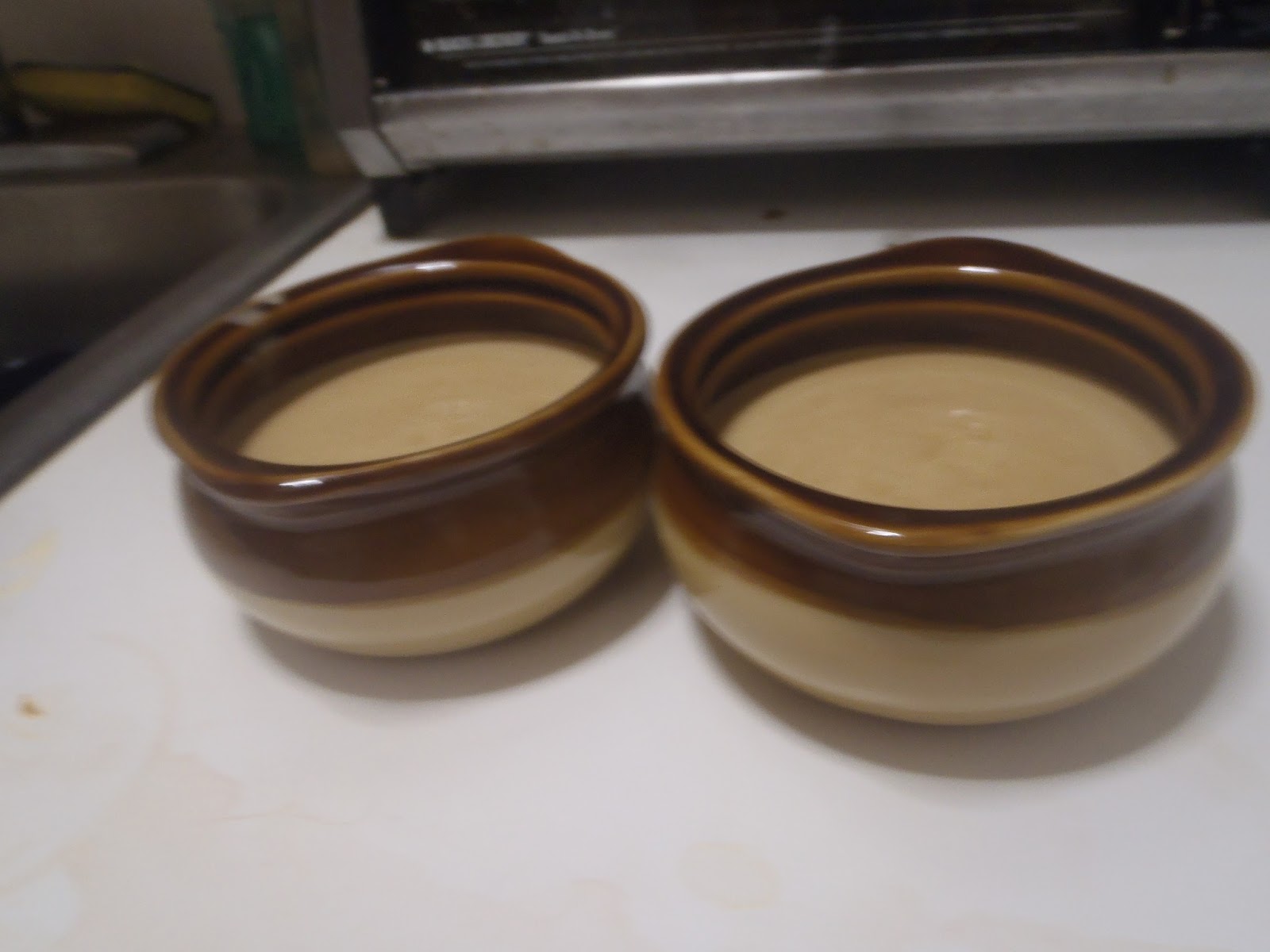
The creamy lobster broth, by contrast, was delicious AND simple to make, though we didn't finish it until the day after we had our lobster meal (we worked on the soup, but fridged the broth over night). We already had all the shells, legs, bodies, and whatnot from the lobster ready to go (remembering to remove all lungs, roe, and other stuff inside), leftover from the previous feast. So all we really had to do was roast the shells briefly in a pan (to make sure they were nice and red), then toss them in a pot with water and various extra ingredients and keep reducing the broth. The recipe called for 3 lobster bodies, but we had 2, so we just cut down the liquids by a third and kept the rest basically the same. The results were AMAZINGLY delicious, but also extremely rich. We got two small bowls of broth out of this... and neither Benson nor I could finish our bowls completely. It was simply... too rich, too much flavor, and our tastebuds simply got fatigued eating too much of it at a time. So we saved the second half of it for the next day and enjoyed it all over again. So if you make this, keep it mind it's definitely best in small portions - if I made it for a group I'd probably make about a shot glass per person - that would be enough to leave you wanting more, but not overwhelm you. (Incidentally, that seems to be the philosophy in general of food from the French Laundry - give you lots of small servings of amazing food, and leave you wanting more. In the case of the lobster itself, we were happy to eat more anyway, since we had it. In the case of the broth, a little bit went a LONG way). Anyway, here is the recipe for the broth - a definite must if you ever have lobster bodies and shells lying around - I'll definitely be making it again!
Creamy Lobster Broth
1/4 cup canola oil
3 lobster bodies (we used 2)
1.5 cups chopped tomatos
1/2 cup chopped carrots
1 bunch tarragon (1/2 oz)
1 cups heavy cream (we used 2/3 cups)
Take your lobster bodies and sear them with the oil over medium to high heat for a couple minutes, until they are well and truly red. Toss them in a pot, add the tomatos, carrots, and tarragon, and cover everything with water (you don't need to add salt). Bring to a boil, then let simmer for an hour - if any skuzz or impurities rise to the top, you can skim those off. This process doesn't require much attention. Once you've done this, strain the stock into another pot, smashing the lobster bodies to make sure all the liquid comes out.
You want to really strain the soup here and make sure there is no lobster shells, impurities, or little particulates. One of the things that Benson and I have learned from The French Laundry Cookbook is that straining your soups, sauces, and liquids increases the quality of your finished dish a LOT more than you might expect. There is even a page long entry in the cookbook titled "When in Doubt, Strain" - apparently the restaurant routinely puts sauces and stocks through an increasingly fine series of strainers 4 or 5 times before anything hits the table. So we ran the entirety of the broth through a tea strainer and cheese cloth, because we don't have a fine mesh chinois or tamis (a note to any readers looking for present ideas!). We have strainers larger than the tea one, but they're not nearly as fine, so we used those first, then moved on to the tea one. This took a while, but we have learned from past experience that it is worth it, so STRAIN your soup!
 |
| Butch |
 |
| Sundance |
Since we were actually going to kill the lobsters ourselves, we wanted to make sure they were going to a worthy cause. So once again, we pulled out "The French Laundry Cookbook" for advice and recipes. For this meal, we chose TWO lobster recipes: one for the meat itself (butter poached lobster with leeks, pommes maxime, and beet essence), and another one for the bodies (creamy lobster broth). In addition, we made roast pears with a pear-butterscotch sauce from James Pattersons' wonderful 'Sauces' cookbook, for dessert (note: not seen in this blog post - this is my LOBSTER entry, and it's long enough as it is). This was truly an ALL DAY project, but one well worth it. The first recipe, the one with the lobster meat, was definitely the most complicated, and has several different components. You COULD eliminate some components to simplify, but it's pretty darn delicious all together, so I'd highly recommend trying it all together if you have the time. But read the full recipe first, because you can do a lot of the steps simultaneously, while various components are in the oven, or cooking down, or whatever.
 |
| The amazing finished product |
1 large yukon gold potato
1 lb beets (or 1 cup beet juice)
1 large bunch of leeks (which will turn into 1.5 cups of leek rounds)
2 tbs tomato diamonds
2 tsp chives
1 tbs Brunoise* (*to make, you need leeks, carrots, and a turnip)
3 cups of butter* (*which makes 1/2 cup clarified butter and 2 cups Beurre Monte)
1/2 tsp red wine vinegar
~1/2 cup white vinegar/8 quarts of water
a few drops of lemon juice
kosher salt
 Part 1: The Lobster. You can do this part early, and leave the lobster meat in the fridge until you are ready to cook it later (though bring it back to room temperature before you cook it). Unlike the traditional boiled lobster, here you don't fully cook the lobster in the shell - you leave it in the hot water only long enough to kill it and for the meat to pull away from the shell for easy removal. So, you need two large containers: one to initially boil the water and one which will hold the lobster and continue to cook it. Since my large pots are rather limited, I actually boiled the water in two separate smaller pots, than cooked the lobsters one at a time in my large pressure cooker pot (the largest pot I own). Fully cover the lobster with cold water in the pot it will be cooked in. Take that water, and put it in the another pot, and add 1/2 cup of white wine vinegar for every 8 quarts of water you used to cover the lobster. Bring this water to a boil. Pour this boiling water over your lobster. This kills the lobster. Now let it seep for 2 minutes (for a 1 1/4 lb lobster; 3 minutes for a 2 lb lobster). Remove the lobster from the hot water, but DON'T discard the water. Twist the claws off of the body and put them back in the hot water for 5 more minutes. During this time, detach the tail and carefully remove the tail meat by twisting off the tail fan thing and pushing the tail up and out (using kitchen shears helps). Cut the tail lengthwise, removing the sand vein. Once the claws are cooked, you remove those from the water as well, twisting off the knuckles. You can get the knuckle meat out as one big chunk of meat if you snip off the very top joint of each knuckle and cut away the shell. Do this. For the claws, you can rock the pincher back and forth, cracking it loose, then remove it straight off the claw, hopefully leaving the meat inside it still attached the the rest of the claw meat (I managed this on the second lobster, but not the first). You remove the rest of the meat from the shell by cracking the shell near the bottom on both sides, and pulling the shell bit off so the meat can come out the bottom. These steps results in a delicious plate of lobster meat, still for the most part uncooked. As for the body, you can pull off the back and remove the lungs, roe and the sack behind the head, and use the rest of the shells and body for soup, later. These can be frozen, or used promptly. You can use the water you boiled the lobster in for a base for your lobster broth, if you are making that as well. We did!
 |
| Delicious Lobster Meat |
 |
| My mandoline |


So, the next step is to very finely slice your potato, as thin as you can make it. And unless you either a) have beet juice, or b) have a juicer (we had neither), you also want to slice your 1 lb of beets as finely as you can, and then dice it nice and small, so they're easily blendable. While you are at it, take the leek rounds (the white and pale green part of the leek) and slice those as well, into strips (see picture in the leek section), until you have 1.5 cups of them. Finally, prepare the vegetables for your brunoise. What is a brunoise, you ask? Good question, I had no idea either. It's a finely diced mixture of various vegetables - in this case, equal parts carrots, leek greens (the dark green part), and turnips - where all of the components are diced to less than 3 mm - a very fine dice indeed (again, see picture in the leek section). You only need 1 tbs total of the brunoise, but since it freezes well, you can make a full turnips worth and save the rest for later. So I diced up the entire turnip, with equal parts by weight of leek greens and carrots (diced by Benson) to match, and just made a LARGE batch of it, rather than a 1 tbs batch. In addition, you want to neatly slice your tomato into at least 2 tbs of diamonds: peel it, quarter it, remove the core until you just have the outside, which you then slice longwise into strips, then diagonally to make diamond shapes, which are rather pretty! So, that's your chopping - but keep all components separate for now!

 |
| Straining the beet juice |
 |
| The finished glaze. |
Part 4: Beet Essence. If you have a juicer or beet juice, you can skip this first bit. But if you DON'T, take your one lb of nicely sliced and diced beets and toss them into the blender. Add perhaps 3/4 cup of water and BLEND. Add more water if you can't get it to blend - what you are going for is a generous cup of the strongest beet water you can get. It's OK if it ends up a little extra watery - you'll be reducing this down to about 2-3 tbs, you just want all the beet essence you can get. So blend, blend, blend, then press it through a strainer and get all the liquid out you can. Then strain THAT through cheesecloth and a finer strainer (or a chinoise/tamis, neither of which I have. See my note on straining down in the Lobster Broth section.) Take this cup of now particulate-free beet juice, and reduce it slowly over low heat to 2-3 tbs of glaze - this will probably take 30-45 minutes, stirring occasionally, and skimming off any skuzz that may rise to the top. Is this worth it? Yes. Aside from the lobster itself, the beet essence turned into my favorite part of this dish, and if I had a juicer would happily make this beet juice on a regular basis for use in other dishes. Plate-licking good. There is one more step to finish this glaze, but that comes right before serving it.
 |
| Blanched leeks |
 |
| Finished Brunoise |
The leeks you should boil for a minute or two; for the diced veggies it shouldn't even take this long. Taste test them to be sure! Then once they've been iced, put them out on a paper towel and pat them dry(ish). Keep the leeks separate for now, but once the brunoise veggies are cooked, you can mix them up together into one big veggie mix. You can now mix the leeks with 1 tbs of the brunoise, the tomato diamonds, and 2 tsp of chives in a small saucepan. But before we can finish this part, we need to talk about butter.
 |
| BUTTER!!!! |
 |
| finished buerre Monte |
Part 7: Finishing Touches. Now that you have your buerre monte, you are ready for the finishing touches. Beet essence: bring the beet glaze to a simmer, then whisk in 3 tbs beurre monte, 1/2 tsp red wine vinegar, and a few drops of lemon juice to taste. Leeks: heat the leeks, tomatos, chives, and brunoise with 1/4 cup plus 1 tbs of beurre monte until warm, then season with salt and white pepper. Pomme Maxim: make sure they're in the desired shape, and reheat briefly in the oven until warm, 2-3 minutes at 300F. Lobster: The lobster should be at room temperature - place them in a wide saucepan and pour buerre monte over them to cover (about 1.5 cups, or the rest of the beurre monte). Put the saucepan over low heat and poach the lobster in the butter for 5 to 6 minutes, enough to heat through. The lobster will be cooked at this point, but it's cooked at such a low heat that the meat stays as soft and as tender as if it were raw. And once this is done, the poaching liquid (aka beurre monte) will have a nice sweet lobster flavor, which is completely reusable and amazing on toast, popcorn, and wherever else you might want to use butter. I have been happily using these leftovers! Presentation: On a small plate, put a spoonful of beet essence in the center. On this, place a generous tablespoon of the leek mixture. On this, artistically lay half a lobster tail, a claw, and the meat of one knuckle (aka, a quarter of a lobster). On top of THIS, place your pomme maxime chip at a jaunty angle. Enjoy!!!!
 |
| Finished dish, sans potato disk. |
While our presentation was probably not as nice as it would be at the French Laundry restaurant itself, I thought that on the whole they turned out looking pretty good. But not as good as they tasted. Even if I don't do the whole rigamarole again, I will very happily poach my lobster in butter in the future, as that part was pretty easy (it was the rest of the preparations that took so much time!). The beet essence, again, was another amazing component I would also be happy to make on its own. The chip on top was tasty and crunchy, and pretty straight forward with the mandoline. And now that I have brunoise in the freezer, I'd eat the leeks again, too, but of the various parts, it was probably the least exciting and took the most work (all that dicing... I really need to remember to grab the food processor that is currently sitting in my parents basement for me).
As each lobster made 2 dishes worth, Benson and I were each able to have seconds, so that we had our whole lobster to ourselves. We probably could have eaten thirds if we'd made a third lobster to split! A complex dish, but truly, truly delicious.
 |
| Searing the lobster shells/bodies |
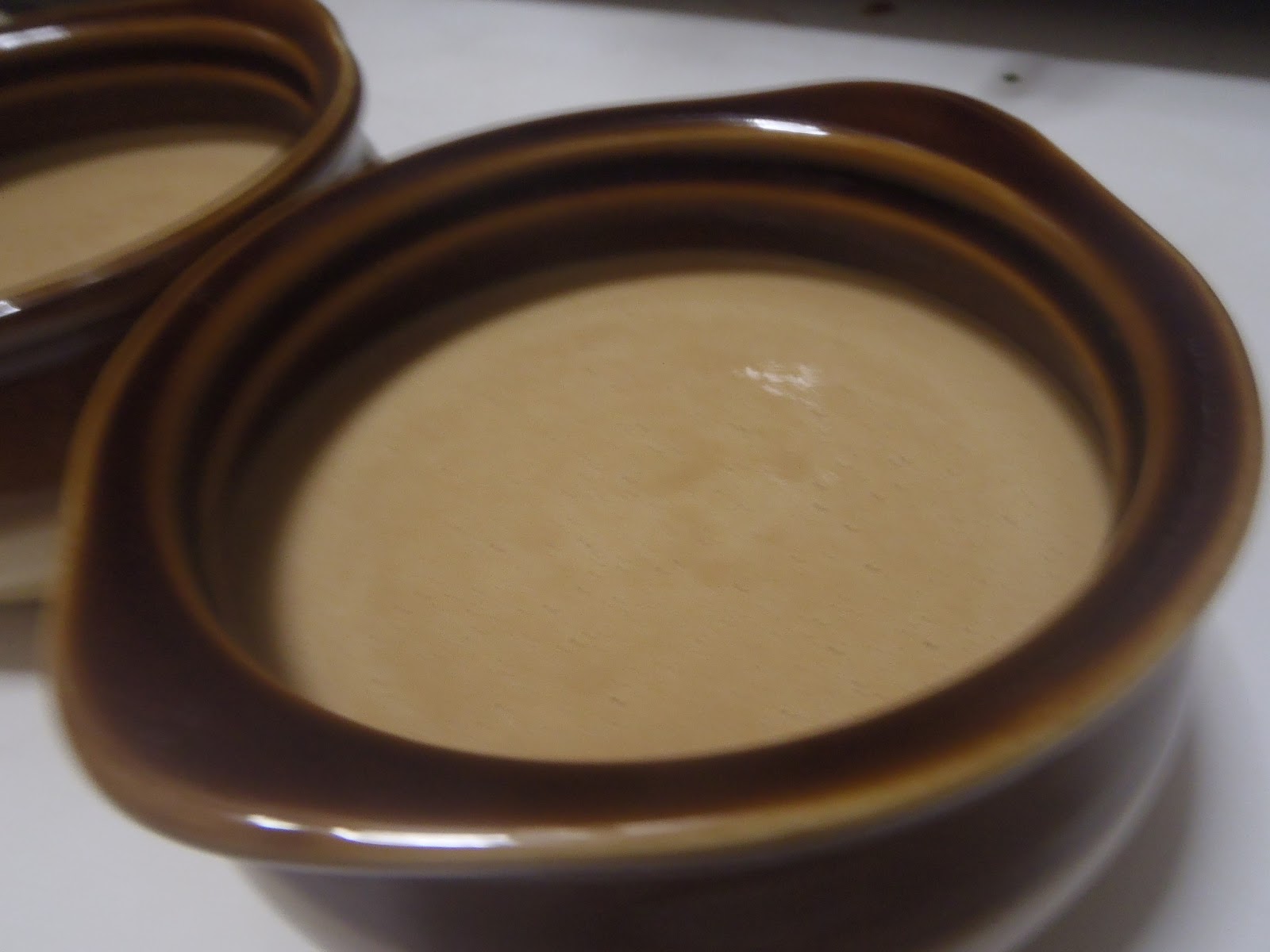 |
| The amazing, rich, frothy, finished broth |
Creamy Lobster Broth
1/4 cup canola oil
3 lobster bodies (we used 2)
1.5 cups chopped tomatos
1/2 cup chopped carrots
1 bunch tarragon (1/2 oz)
1 cups heavy cream (we used 2/3 cups)
 |
| Making the Soup base |
Take your lobster bodies and sear them with the oil over medium to high heat for a couple minutes, until they are well and truly red. Toss them in a pot, add the tomatos, carrots, and tarragon, and cover everything with water (you don't need to add salt). Bring to a boil, then let simmer for an hour - if any skuzz or impurities rise to the top, you can skim those off. This process doesn't require much attention. Once you've done this, strain the stock into another pot, smashing the lobster bodies to make sure all the liquid comes out.
 |
| Stock |
 |
| Adding cream |
Next, take your now-particulate-free liquid and put it in a pot. You will now reduce this liquid (which is probably about a gallon of stock which doesn't taste particularly flavorful) to 2 cups (1.5 for us, since we started with fewer lobster bodies) - this takes a while, but again doesn't require much attention. At that point, the flavor is extremely concentrated, and, after straining it once more, we add one cup (2/3 cups for two lobster) of cream! Are we done? Of course not! Reduce this sucker down until it is once again 2 (1.5) cups of concentrated lobster goodness. This time you DO need to pay attention, because cream and heat can equal burning, so stir.
At this point, you take the broth, strain it one more time, just for fun, and put it in the refrigerator for several hours, to chill (or up to three days, according to the book). You want to do this so the flavor melds nicely - we left it overnight and that worked fine. Once you are ready to eat it, you put the cold broth into a saucepan and heat it on medium, whisking vigorously as you do so. You want it to froth up significantly, it seemed like it practically doubled in volume (though I didn't do a strict measurement of that). So once it's hot and frothy, you can serve it. In small, delicious portions. It is truly a delicious and surprisingly easy soup (and would have been easier if we had a LARGE fine mesh strainer, rather than a tiny tea strainer).
So the lobster resulted in two amazing meals - three, if you count the second lunch we had soup for. And I would definitely order live lobster again - while we did do a more complicated version of lobster, I'd be more than willing to try just doing a straight up boiled lobster, as well, if they were for a reasonable price and I didn't want to go too complicated. But I'd also very happily butter poach it again, since, if you ignore the extra veggies and sauces, that in of itself is amazing (and leaves you with leftover lobster butter - amazing on toast!). And when I do get lobster again, I will never ever throw out the shells. Even if I don't have time, I could just freeze them and make the broth some other time. Totally worth it!
At this point, you take the broth, strain it one more time, just for fun, and put it in the refrigerator for several hours, to chill (or up to three days, according to the book). You want to do this so the flavor melds nicely - we left it overnight and that worked fine. Once you are ready to eat it, you put the cold broth into a saucepan and heat it on medium, whisking vigorously as you do so. You want it to froth up significantly, it seemed like it practically doubled in volume (though I didn't do a strict measurement of that). So once it's hot and frothy, you can serve it. In small, delicious portions. It is truly a delicious and surprisingly easy soup (and would have been easier if we had a LARGE fine mesh strainer, rather than a tiny tea strainer).
 |
| Soooooo goooooooood. |
So the lobster resulted in two amazing meals - three, if you count the second lunch we had soup for. And I would definitely order live lobster again - while we did do a more complicated version of lobster, I'd be more than willing to try just doing a straight up boiled lobster, as well, if they were for a reasonable price and I didn't want to go too complicated. But I'd also very happily butter poach it again, since, if you ignore the extra veggies and sauces, that in of itself is amazing (and leaves you with leftover lobster butter - amazing on toast!). And when I do get lobster again, I will never ever throw out the shells. Even if I don't have time, I could just freeze them and make the broth some other time. Totally worth it!
Monday, November 19, 2012
The French Laundry's Gruyère Cheese Gougères
As I said in the last blog post, while Benson and I visited our friend Kaila in Waltham, we did a lot of cooking. This dish is from the same meal as the previous post, but I thought it deserved its own explanation. This recipe originates from the wonderful French Laundry Cookbook, featuring recipes from Thomas Keller's Michelin 3-star restaurant The French Laundry in California. It has amazing, gourmet recipes, with full explanations of WHY you do certain steps, and clear explanations of techniques which I might have thought were beyond me or too complicated until I tried them and saw how much they improved things. It was a Christmas present from a thoughtful, sweet, and hungry boyfriend. I've made other dishes from this cookbook, as well, and each of them have tasted delicious. My presentation skills usually are a bit lacking, but, well, the food is good. It's definitely inspiring me to improve myself, at any rate! Anyways, Gruyère Cheese Gougères are hot and crisp and moist in the center, great for a large group of people to munch on, and, despite the long recipe description, pretty easy to make!
Benson and I have made these twice: the first time, Benson described the taste as "like Goldfish" (you know, the little orange fish snacks?) - but the second time it didn't quite have that same flavor - it depends highly on the exact cheese you use. The first time we used an older, harder Gruyere and the second time it was a bit fresher and softer. Both times were good, but I could taste the difference. So, if possible, taste your Gruyere to make sure its a flavor you like. I think I'd go with the older hard gruyere, personally! You could use a different cheese for an entirely different flavor! Chedder, perhaps? I was pretty happy with Gruyere.
For another recount of this recipe, visit the excellent blog "French Laundry at Home" in which one woman cooks EVERY DISH from the French Laundry Cookbook, with her own minor tweaks and advice. Every recipe I've made from French Laundry, I've looked at her blog for advice. She also has a useful list of both the most approachable recipes, and her favorite recipes: and sometimes these two lists even overlap! Find that here.
 |
| This was the result of shredding a 3.5 oz block of cheese |
For another recount of this recipe, visit the excellent blog "French Laundry at Home" in which one woman cooks EVERY DISH from the French Laundry Cookbook, with her own minor tweaks and advice. Every recipe I've made from French Laundry, I've looked at her blog for advice. She also has a useful list of both the most approachable recipes, and her favorite recipes: and sometimes these two lists even overlap! Find that here.

7 tbs unsalted butter
1 tbs Kosher salt (specifically Diamond Crystal, apparently)
1 pinch white sugar
1 1/4 cup white flour
4 to 5 large eggs
1 1/4 cup shredded Gruyere cheese (a 3.5 oz block is about right)
fresh ground white pepper
A brief aside on salt: I found these slightly salty (and I LOVE salt), so you might want to go a little easy on the salt. The book actually specifies Diamond Crystal Kosher Salt, and warns that if you use some other kind of salt you may have to adjust your salt levels further, since different types of salt have different properties. Kosher salt dissolves fast and is good at mixing it's flavor into whatever your cooking. I've recently started using kosher salt a lot more in my cooking for this reason. I currently have not one, not two, but FIVE different kinds of salt in my house: iodized salt, kosher salt, a grinder full of sea-salt, my flavored truffle salt, and my prized "popcorn and nut" salt . This last is a very uniform and fine flaked salt which sticks very well to things like nuts and popcorn (hence the name). I only use it for things like popcorn, nuts, and homemade fries - things that you want salted in THAT sense, not salted in the sense of a well seasoned soup. My dad always has this around the house, and, before the internet became so convenient for shopping, often had trouble finding it in stores. This resulted in him hitting up movie theaters (mostly the independent Charles Theater in Baltimore) and purchasing them directly from the movie theater. Though since he's a big movie goer, and after a while people recognize him at these places, he often gets the salt for free. This is how I got MY popcorn salt: when seeing Serenity (the movie from the tv show Firefly) in Boston, we noticed that the popcorn stand had laying out a ton of shakers of Popcorn salt. So we went up and asked how much they would sell two of them to us. This resulted in a couple very confused popcorn venders, who checked with the manager, who proceeded to just give us two canisters. It was awesome and highly amusing at the time. Anyway, that aside wasn't as brief as expected, but again, I really like salt.

Back to the recipe: Preheat the oven to 450F, then combine water, sugar, salt and butter in a saucepan and bring to a boil. Add ALL the flour at once, reducing the heat to medium, then stir constantly for 2 minutes. During this time, the batter should reduce and start to dry up and form a ball of dough.
Next, transfer to a bowl and beat with a mixer with a dough paddle for 30 seconds. Or in the case of someone who doesn't have such a thing (*cough* me *cough*) just beat stir it with a wooden spoon.
 Add 4 eggs, then mix more on the dough paddle thing (or at this point, blend it in an electric mixer on the "mix" setting). You want it to form a nice, smooth, silky dough, which when you lift up the mixer forms soft peaks which fall over at the tip. If its stiff, add the egg white of the remaining fifth egg, mix more, and if it's STILL too stiff add the yolk as well. Once its softly peaking, add 3/4 of the gruyere cheese and mix until smooth. Taste, and adjust the seasoning by adding additional salt (again, not TOO much) and ground white pepper to taste.
Now, line two cookie sheets with parchment paper or baking mat. In 1 tbs lumps (or perhaps slightly larger), you want to place the batter on the parchment, with 2 inches between each mound. Ideally, these are in nice little balls - we used a melon baller which worked nicely, though I think they turned out a little smaller than I'd like - when they're a little larger they fluff up a bit more. The French Laundry Cookbook recommends using a pastry bag with a pastry tip to put out the little balls - you can do this by stuffing the dough in a ziplock bag and cutting off the corner. Once you've done this, sprinkle the remaining cheese on top of the doughballs, a bit of cheese on each one! About 1/2 tsp of cheese on each puff, ideally.
We halved the recipe, so we ended up with just over one baking tin full of these: if possible, you want to fit all of your puffs in one batch, since you will be changing the temperature of the oven partway through and thus will have to do each batch completely separately and wait for the oven to get back up to heat between if you don't manage it in one go. So, bake for 7-8 minutes at 450F, until they've puffed up a little and hold their shape. Then reduce heat to 350F, and bake for 20-25 minutes more until they're a lovely light golden brown, puffy and beautiful to behold. Biting into one at this point (careful, they're HOT), you'll find it's mostly hollow, slightly moist on the inside but still crisp on the outside. Absolutely delicious, and best when piping hot. The next day they're still tasty, but they lose a lot of the oomph they have right out of the oven. At any rate, a tasty and DIFFERENT type of starch/roll you can add to your meal, full of cheesy goodness!
fresh ground white pepper
A brief aside on salt: I found these slightly salty (and I LOVE salt), so you might want to go a little easy on the salt. The book actually specifies Diamond Crystal Kosher Salt, and warns that if you use some other kind of salt you may have to adjust your salt levels further, since different types of salt have different properties. Kosher salt dissolves fast and is good at mixing it's flavor into whatever your cooking. I've recently started using kosher salt a lot more in my cooking for this reason. I currently have not one, not two, but FIVE different kinds of salt in my house: iodized salt, kosher salt, a grinder full of sea-salt, my flavored truffle salt, and my prized "popcorn and nut" salt . This last is a very uniform and fine flaked salt which sticks very well to things like nuts and popcorn (hence the name). I only use it for things like popcorn, nuts, and homemade fries - things that you want salted in THAT sense, not salted in the sense of a well seasoned soup. My dad always has this around the house, and, before the internet became so convenient for shopping, often had trouble finding it in stores. This resulted in him hitting up movie theaters (mostly the independent Charles Theater in Baltimore) and purchasing them directly from the movie theater. Though since he's a big movie goer, and after a while people recognize him at these places, he often gets the salt for free. This is how I got MY popcorn salt: when seeing Serenity (the movie from the tv show Firefly) in Boston, we noticed that the popcorn stand had laying out a ton of shakers of Popcorn salt. So we went up and asked how much they would sell two of them to us. This resulted in a couple very confused popcorn venders, who checked with the manager, who proceeded to just give us two canisters. It was awesome and highly amusing at the time. Anyway, that aside wasn't as brief as expected, but again, I really like salt.

Back to the recipe: Preheat the oven to 450F, then combine water, sugar, salt and butter in a saucepan and bring to a boil. Add ALL the flour at once, reducing the heat to medium, then stir constantly for 2 minutes. During this time, the batter should reduce and start to dry up and form a ball of dough.
Next, transfer to a bowl and beat with a mixer with a dough paddle for 30 seconds. Or in the case of someone who doesn't have such a thing (*cough* me *cough*) just beat stir it with a wooden spoon.

Now, line two cookie sheets with parchment paper or baking mat. In 1 tbs lumps (or perhaps slightly larger), you want to place the batter on the parchment, with 2 inches between each mound. Ideally, these are in nice little balls - we used a melon baller which worked nicely, though I think they turned out a little smaller than I'd like - when they're a little larger they fluff up a bit more. The French Laundry Cookbook recommends using a pastry bag with a pastry tip to put out the little balls - you can do this by stuffing the dough in a ziplock bag and cutting off the corner. Once you've done this, sprinkle the remaining cheese on top of the doughballs, a bit of cheese on each one! About 1/2 tsp of cheese on each puff, ideally.
 |
| Just before baking |
 |
| A lovely toasty brown, with the cheese all melted into the puff! |
Subscribe to:
Posts (Atom)